



CALL YOUR TRUSTED LOCAL EXPERTSSM

What Is the Most Common Cause of Boiler Failure?
By Dave Musial: CEO of Four Seasons Heating, Air Conditioning, Plumbing, Electric.
- March 12, 2026
Most residential boiler breakdowns come from preventable maintenance lapses or operator error. Missed annual service, depleted corrosion inhibitors, untreated feedwater, and neglected pressure controls create the conditions for familiar failures. Left unchecked, these issues lead to kettling, limescale build-up, oxygen-related corrosion, and unexplained low boiler pressure.
Most residential boiler breakdowns come from preventable maintenance lapses or operator error. Deposits and corrosion put extra load on pumps, valves, and heat exchangers until components fail or a circulator seizes. Technicians see waterside problems and operator mistakes more often than single catastrophic component failures. Small missed checks can compound into a boiler that needs an expensive repair or replacement.
Key takeaways
- Poor maintenance and operator error are the most common causes of boiler failure; missed service, depleted inhibitors, and unmanaged pressure faults drive most breakdowns.
- Early signs include kettling or banging, low or fluctuating pressure, cold radiators, noisy pumps, and visible leaks.
- Quick homeowner actions: check the pressure gauge, bleed cold radiators, and record readings; only top up or re-pressurize if the owner’s manual allows.
- Monthly or seasonal checks plus an annual professional tune-up help limit scale, corrosion, and seized components.
- Call a professional immediately for a gas smell, persistent pressure loss, major leaks, exposed wiring, or no heat in freezing conditions.
Quick answer
Poor maintenance and operator error are the leading causes of residential boiler failure. These failures usually show up as waterside problems, such as kettling, limescale, depleted corrosion inhibitors, and oxygen-induced pitting, or as failed pressure controls and safety devices. Missed routine service lets scale and pressure faults go unnoticed until pumps or heat exchangers are overloaded, so follow the homeowner checks below.
How scale, corrosion and pressure faults damage boilers
Mineral scale and kettling often begin quietly and escalate as deposits form on the heat exchanger. Scale acts like insulation, causing local overheating that raises stress, produces noisy operation, and can create small cracks. That trapped heat forces the boiler to burn more fuel to reach setpoints, which lowers efficiency and shortens component life.
Dissolved oxygen in makeup water causes pitting corrosion that homeowners may underestimate. Small pits can grow into leaks that require a heat exchanger replacement, and other chemical attacks, such as caustic corrosion or hydrogen damage, produce similar metal loss. Left untreated, these waterside problems can make a boiler unsafe or uneconomic to repair.
Pressure faults magnify waterside problems because most systems run within a narrow pressure range. Low pressure causes poor circulation and pump strain, while high pressure stresses joints, safety valves, and the heat exchanger. Typical mechanical outcomes include leaking valves, collapsed expansion tanks, frequent pressure drops, and safety relief valves discharging during heat cycles, so check the pressure gauge and expansion tank as part of routine care.
How to spot warning signs at home and safe quick fixes
Knowing what to listen for, see, and smell lets you triage heating problems before they worsen. Kettling or loud banging usually indicates scale or restricted flow, and cold radiators while the boiler runs point to trapped air or circulation issues. Rusty or brown water signals internal corrosion, and visible puddles mean an active leak.
Try these low-risk checks only if you are comfortable working with your boiler and you have the owner’s manual for reference. Stop and call a technician if you smell gas, see heavy leaks, a reset does not clear the fault, or you are unsure.
- Check the pressure gauge; many systems read about 1 to 1.5 bar when cold, so record the reading before and after any action.
- Bleed radiators to remove trapped air and improve circulation.
- Re-pressurize the system only if the manual allows and you can do so safely.
- Reset a fault code only when the manual recommends it and the underlying cause is obvious
Quick fixes can be useful for triage, but they may hide deeper problems: re-pressurizing can mask a slow leak, repeated bleeding may conceal a failing pump, and clearing codes will not fix a failing heat exchanger or persistent kettling. When a DIY step only buys time, schedule a professional inspection so a technician can diagnose corrosion, scale, or pressure-system faults and recommend a lasting repair.
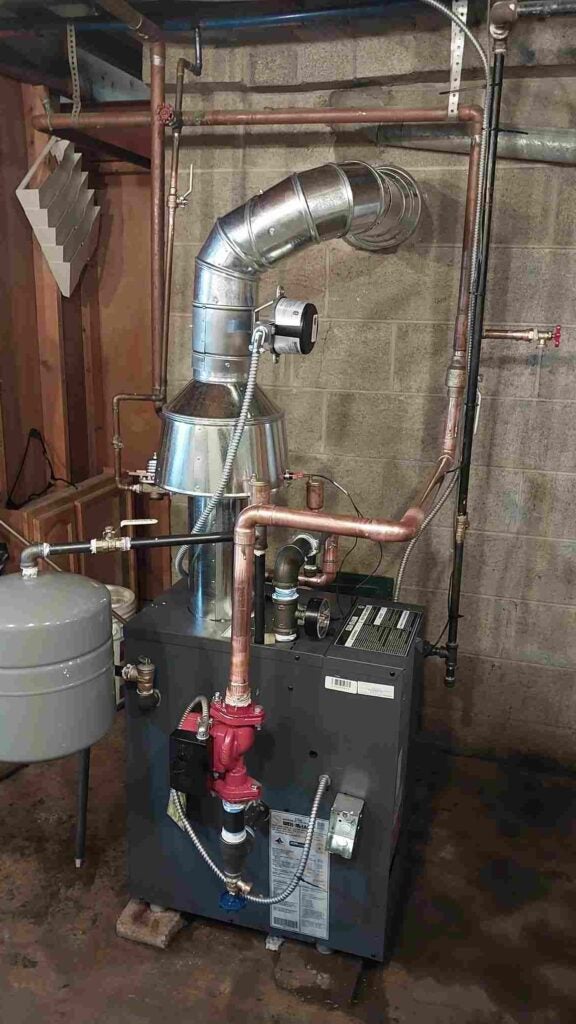
Preventive maintenance checklist and what a professional tune-up includes
When certified technicians perform a boiler tune-up, they follow a structured safety and efficiency checklist. A professional inspection helps identify scale buildup, corrosion, pressure issues, and worn components before they cause a system failure.
During a typical tune-up, technicians may perform the following tasks:
- Combustion and efficiency testing to ensure the boiler is burning fuel safely and operating at peak performance
- Inspection of the heat exchanger and flue for cracks, corrosion, or blockages
- Testing safety controls, including pressure relief valves and low-water cutoff devices
- Checking pumps, valves, and circulators for wear, leaks, or restricted flow
- Flushing the system or applying targeted descaling when mineral deposits are present
- Replenishing corrosion inhibitors to protect internal components from rust and pitting
- Documenting findings and providing written repair estimates before any additional work begins
A professional tune-up ensures the boiler runs safely and efficiently while catching early signs of failure. Regular inspections help prevent unexpected breakdowns, extend equipment life, and keep heating systems operating reliably during cold weather.
What you can check in-between professional tune-ups
Use a short, repeatable checklist so small issues do not become emergency replacements. Run these items monthly or seasonally; each check takes a few minutes but prevents common failure paths.
- Visual leak check around the boiler and radiators to catch hidden drips before they cause corrosion or water damage.
- Glance at the pressure gauge and note readings; low pressure is an early sign of leaks or trapped air.
- Listen for new noises during startup and operation; unusual sounds often precede mechanical failure.
- Keep a simple service log with dates and adjustments so technicians can spot trends and past fixes.
- If you know how, bleed radiators with cold spots to release trapped air and restore even heat throughout your home.
Routine visual checks catch obvious issues, but the most reliable way to prevent failures is an annual professional inspection, with more frequent attention for older boilers or systems in hard-water areas. Regular homeowner checks combined with a yearly professional tune-up stop most failures by finding leaks, corrosion, and control faults early and keeping system chemistry and pressure in range.
Costs, repair vs replacement and smart decision rules
Boiler repair costs vary by component and region. Expect a circulator pump replacement to run roughly $300 to $900, valve or expansion tank repairs in the $150 to $600 range, and ignition or gas valve work from about $200 to $700. A failed heat exchanger is expensive; repair or replacement of that component often approaches or exceeds half the price of a new boiler, so get written estimates before deciding.
Use practical rules of thumb when weighing repair versus replacement. Consider replacement for boilers older than 12 to 15 years, repeated major repairs, or a cracked or leaking heat exchanger. A common decision rule is to replace when a single repair costs more than about 40 percent of a new boiler, or when you have had two or more major repairs in the last three years, while financing and warranties can change the outcome.
When to call a professional and what to expect from the service visit
Some problems are clear emergencies and need immediate professional help. If you smell gas, see significant water pooling, lose pressure that will not recover, find exposed or sparking wiring, or have no heat during extreme cold, shut off the appropriate valve or breaker only if it is safe, evacuate if necessary, and call a licensed technician or emergency number right away.
- Call Immediately for:
- Gas smell. Evacuate and call emergency services and your utility provider.
- Significant water on the floor or from the boiler connection.
- Persistent loss of boiler pressure with no obvious leak.
- Exposed wiring that sparks or a burning electrical smell.
- No heat in dangerously cold conditions.
A certified technician follows a methodical inspection so you get clear answers and options. Expect a full visual inspection, pressure and expansion tank checks, combustion and carbon monoxide testing, a heat exchanger review for scaling or pitting, and a brief water chemistry assessment focused on corrosion risk and low-pressure causes. The technician will provide a written estimate with repair options, a realistic timeline, and follow-up recommendations.
Choose contractors with proper licensing, insurance, transparent upfront pricing, 24/7 availability, and solid guarantees. Four Seasons Heating, Air Conditioning, Plumbing, Electric has served Chicago homes and businesses since 1971 and provides 24/7 emergency response, certified technicians, and fully stocked trucks for fast, on-site diagnostics. Ask for references, a clear scope of work, and written pricing
before you authorize repairs.
If you need local service, contact Four Seasons Heating, Air Conditioning, Plumbing, Electric for service options and emergency response.
For homeowners wanting to reduce the chance of an emergency in the first place, review prevention trategies and common household risks in our piece on The 5 Most Common Plumbing Emergencies (And How to Prevent Them), and schedule professional tune-ups when recommended.
Day or Night, 24/7, Count on Chicago’s HVAC Experts at Four Seasons
Schedule an Appointment