



CALL YOUR TRUSTED LOCAL EXPERTSSM

Why Does My Water Heater Take So Long to Heat?
By Dave Musial: CEO of Four Seasons Heating, Air Conditioning, Plumbing, Electric.
- February 26, 2026
Waiting for hot water shouldn’t be part of your morning routine. When your water heater takes forever to heat up, it’s more than an inconvenience. It wastes water while driving up your energy bills. Worse, it’s a sign that something needs attention.
Four Seasons Heating & Cooling has served Chicagoland homeowners for over 50 years. We’ve installed thousands of water heaters across the area. That experience has taught us that slow-heating water typically stems from a few common causes. Here’s what you need to know.
In this article, you’ll learn:
- The most common causes of slow water heating
- How sediment buildup affects your water heater’s performance
- When repair makes sense versus replacement
- How Chicago’s hard water impacts heating times
Understanding Normal vs. Problem Heating Times
A properly functioning water heater should reheat a full tank within 30 to 60 minutes. Gas water heaters typically heat faster than electric models. Tankless systems should provide hot water within seconds of turning on the tap.
If you’re waiting longer than these timeframes or notice hot water runs out faster than it used to, your system is underperforming. The good news is that most slow-heating issues can be fixed once you identify the root cause.
Common Causes of Slow Water Heating
Several factors can slow down your water heater’s performance, and each requires a different fix.
| Cause | How It Affects Heating | Solution |
|---|---|---|
| Sediment Buildup | Creates a barrier between the heat source and the water | Professional tank flush |
| Faulty Heating Element | Reduces heating capacity by 50% or more | Element replacement |
| Incorrect Thermostat Setting | Water never reaches the desired temperature | Thermostat adjustment or replacement |
| Undersized Water Heater | Cannot meet household demand | System upgrade |
| Distance from Fixtures | Heat loss as water travels through pipes | Pipe insulation or recirculation pump |
Sediment Buildup: The Silent Performance Killer
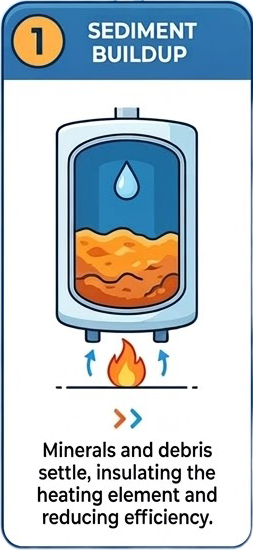
Chicago’s moderately hard water contains minerals like calcium and magnesium. Over time, these minerals settle at the bottom of your tank, forming a layer of sediment that acts like insulation between your burner or heating element and the water.
This sediment forces your water heater to work harder and longer to heat the same amount of water. You might hear rumbling or popping sounds as trapped air bubbles rise through the sediment layer.
Signs your water heater needs flushing:
- Loud rumbling or popping noises from the tank
- Water takes noticeably longer to heat
- Hot water has a rusty or discolored appearance
- Reduced hot water supply
Annual flushing removes this buildup and restores efficiency. Four Seasons technicians perform professional tank flushes that safely clear sediment without damaging internal components.
Heating Element and Thermostat Problems
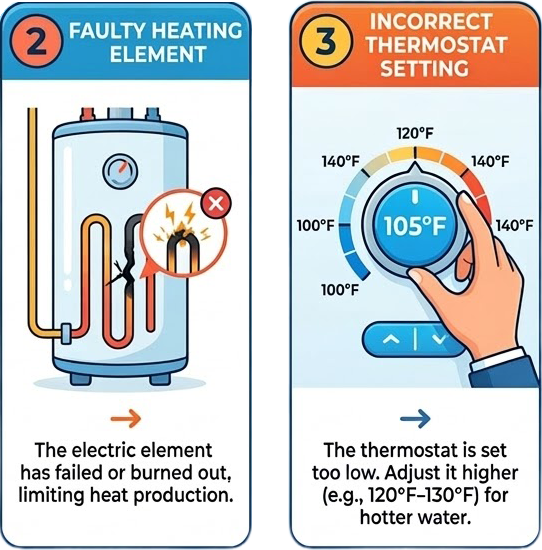
Electric water heaters contain two heating elements: one near the top and one at the bottom. If one element fails, your heater can only warm half the tank efficiently, leading to longer recovery times and inconsistent temperatures.
Gas water heaters depend on a properly functioning burner and thermostat. Dust, debris, or rust buildup can reduce flame size and efficiency. A malfunctioning thermostat might keep your water temperature too low, even after the unit runs for a long time.
Warning signs of element or thermostat failure:
- Water is lukewarm instead of hot
- Hot water runs out faster than normal
- Inconsistent water temperature throughout the day
- Visible corrosion around heating element ports
These repairs require specialized knowledge and tools. Our certified technicians can test electrical elements and thermostat accuracy, then replace failed components the same day in most cases.
Your Water Heater Might Be Too Small
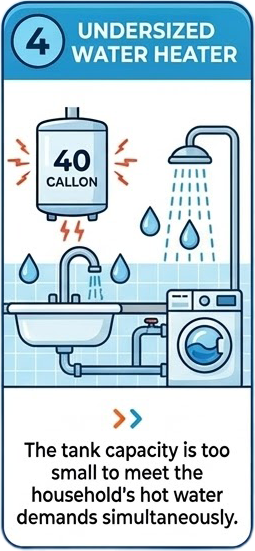
When your water heater was installed, it was sized for your household at that time. If your family has grown or you’ve added water-heavy appliances like a soaking tub or second dishwasher, your current unit may simply be undersized for your needs.
The standard guideline is 10 to 15 gallons of tank capacity per person in your home. A family of four typically needs at least a 40-gallon tank. Tankless systems are rated by flow rate (gallons per minute) and must match your peak water usage.
If your water heater struggles to keep up even after maintenance, upgrading to a larger or more efficient system often makes more sense than repeated repairs.
Distance and Pipe Issues
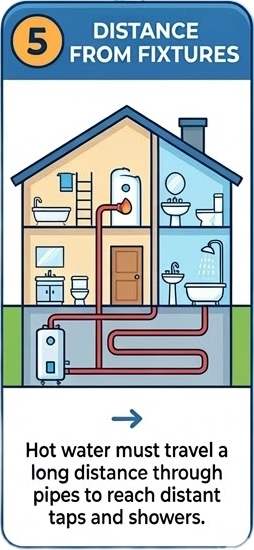
In larger homes or multi-story properties, hot water must travel long distances through pipes before reaching your faucet or shower. During that journey, water cools down, especially if pipes run through cold basements or exterior walls.
This isn’t a water heater problem, but it affects your hot water experience. Solutions include:
- Insulating hot water pipes to maintain temperature
- Installing a hot water recirculation system
- Adding a point-of-use water heater for distant fixtures
Our team can assess your home’s plumbing layout and recommend the most cost-effective solution for your situation.
How Chicago’s Cold Winters Affect Heating Times
Chicago’s brutal winters put extra strain on your water heater. When incoming water is 40°F instead of 60°F, your system needs more time and energy to heat that water to 120°F.
Older Chicago buildings present unique challenges. Many homes in neighborhoods like Lincoln Park and Pilsen were built before modern plumbing standards. These properties often have undersized gas lines or inadequate venting that restricts burner performance.
We’ve worked on thousands of installations in older Chicago buildings. Our technicians understand which systems work best in these properties and can identify issues that less experienced contractors might miss.
When to Repair vs. Replace Your Water Heater
Most traditional tank water heaters last 8 to 12 years. Tankless systems can last up to 20 years with proper maintenance. If your unit is approaching the end of its expected lifespan and experiencing multiple problems, replacement typically offers better value than repeated repairs.
| Factor | Repair | Replace |
|---|---|---|
| Age | Under 8 years old | 10+ years old |
| Problem | Single-component failure | Multiple ongoing issues |
| Efficiency | Still heating adequately when working | Consistently slow or inadequate |
| Rust/Corrosion | Minimal exterior rust | Visible tank corrosion or leaks |
| Cost | Repair costs less than 30% of replacement | Repair costs exceed 50% of replacement costs |
Modern water heaters are significantly more efficient than models from even 10 years ago. The energy savings alone can offset the replacement cost over time.
Preventive Maintenance Extends Your Water Heater’s Life
Regular maintenance prevents most slow-heating problems before they start. Four Seasons offers comprehensive water heater maintenance that includes:
- Sediment flush to remove mineral buildup
- Thermostat calibration and testing
- Heating element inspection and testing
- Anode rod examination for corrosion
- Pressure relief valve testing
- Gas burner cleaning (gas models)
- Complete safety inspection
Annual maintenance catches small issues before they become expensive problems. It also ensures your water heater runs at peak efficiency, saving money on energy bills.
Trust 50+ Years of Local Water Heater Expertise
When hot water problems disrupt your home, you deserve a local team that answers your call and gets the job done right. Contact Four Seasons today to schedule service or get a free estimate.
Four Seasons has served Chicagoland homeowners since 1971. We are available 24/7 every day of the year. Our certified technicians arrive on time and accurately diagnose your problem. You’ll get honest recommendations, not a sales pitch.
We offer job-based pricing with no hidden fees. There are no extra charges for nights, weekends, or holidays. The price we quote is the price you pay.
Call us at 866-4-SEASONS or schedule online for fast, reliable water heater service throughout Chicago and Northwest Indiana.
Day or Night, 24/7, Count on Chicago’s HVAC Experts at Four Seasons
Schedule an Appointment